
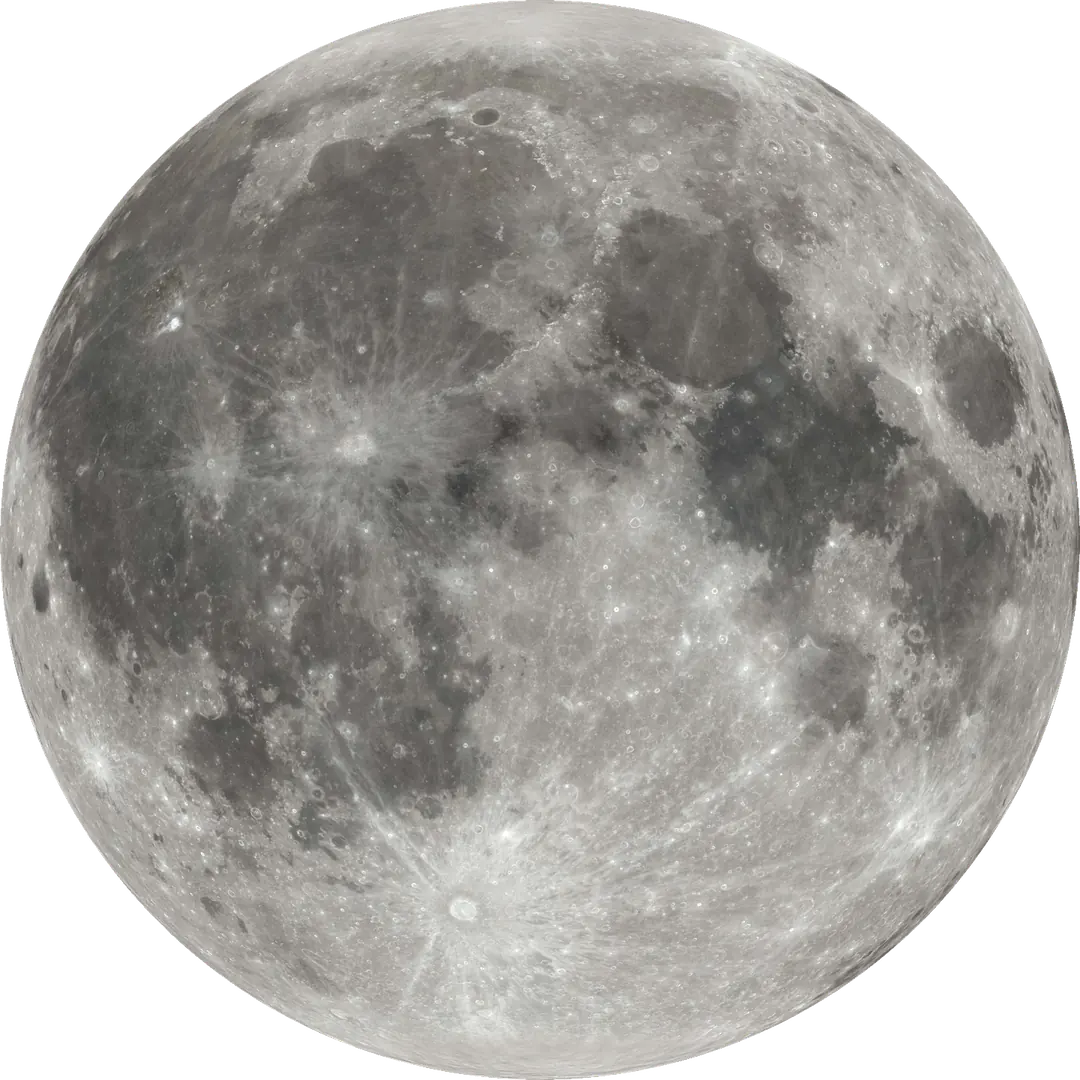
The next Cold Moon is full on . The Cold Moon is the full moon of December in the traditional North American almanac naming, named for the deepening cold of early winter.
When is the Cold Moon?
The Cold Moon is the full moon that falls in December by Coordinated Universal Time (UTC), and the table below lists the upcoming dates with local times.
The full moon is one instant, so its local date depends on the time zone. A Cold Moon early on December 1 in UTC is still a November 30 full moon in New York. A full moon late on December 31 in UTC can fall on January 1 in Sydney, where it opens the new year. This site names each full moon by its UTC month and lists New York, London and Sydney times beside the UTC time.
The December solstice falls around December 21, so the Cold Moon can be the last full moon of autumn or the first of winter. For the very next full moon of any month, see the next full moon.
The Cold Moon closes the yearly cycle of full moon names used by the Farmers’ Almanac and the Old Farmer’s Almanac.
Key facts
- The Cold Moon is the full moon of December; this site assigns the name by the UTC date.
- Other names include Long Night Moon, Moon Before Yule and Moon of the Popping Trees.
- At New York's latitude the Cold Moon climbs about 67–78° high and stays up for about 15–16 hours.
- The Cold Moon of December 21, 2010 was a total lunar eclipse on the day of the winter solstice.
Full moon time around the world
The Cold Moon is full at the same instant everywhere, 01:28 UTC on Thursday, December 24, 2026, which is 8:28 PM on December 23 in New York and 12:28 PM on December 24 in Sydney.
Los Angeles
17:28
Wed 23 Dec · PST
New York
20:28
Wed 23 Dec · EST
London
01:28
Thu 24 Dec · GMT+0
Your time
01:28
Thu 24 Dec · UTC
Delhi
06:58
Thu 24 Dec · GMT+5:30
Sydney
12:28
Thu 24 Dec · GMT+11
Why is it called the Cold Moon?
The Cold Moon is named for the month when winter cold takes hold and the nights grow long and dark.
The Old Farmer’s Almanac says the Cold Moon is fittingly associated with the month when winter cold fastens its grip. The Farmers’ Almanac describes it as marking the deepest cold of the Northern Hemisphere year. timeanddate notes that the name reflects the start of winter in the Northern Hemisphere.
Other names for the December full moon
Other names for the December full moon include the Long Night Moon, Moon Before Yule, Oak Moon and Frost Moon, and they describe long nights, frost, drifting snow, midwinter and trees cracking in the cold.
The Old Farmer’s Almanac lists these names with the peoples it credits:
- Drift Clearing Moon, Frost Exploding Trees Moon and Hoar Frost Moon (Cree)
- Little Spirit Moon (Anishinaabe)
- Long Night Moon (Mohican)
- Mid-winter Moon (Lakota and Northern Ojibwe)
- Moon of the Popping Trees (Oglala)
- Moon When the Deer Shed Their Antlers (Dakota)
- Snow Moon (Haida and Cherokee)
- Winter Maker Moon (Western Abenaki)
The Old Farmer’s Almanac explains that the name Long Nights Moon reflects the full moon’s closeness to the winter solstice, the night with the least daylight. The Farmers’ Almanac adds Moon Before Yule, which it ties to American colonial tradition and the midwinter festival. January’s full moon carries the matching name Moon After Yule. The Farmers’ Almanac also lists Oak Moon and Frost Moon.
Why is the Cold Moon so high in the sky?
The Cold Moon rides high because a full moon sits opposite the Sun, and the December Sun is at its lowest point of the year near the winter solstice.
The Farmers’ Almanac notes that the December full moon rides higher in the sky than any other full moon of the year. At the latitude of New York, it peaks about 67–78° above the southern horizon. At London’s latitude it reaches about 56–67°. A June full moon at the same places peaks only about 20–32° and 10–21°.
The Cold Moon also stays up longest. It rises in the northeast around sunset and sets in the northwest around sunrise, crossing the sky for about 15–16 hours in New York and about 17 hours in London. Local moonrise and moonset times show the exact span for each city.
The Cold Moon usually sits in Taurus, sometimes in Gemini or on the edge of Orion. In some years it passes within 10° of Aldebaran, the bright orange star of Taurus.
Cold Moons and lunar eclipses
The Cold Moon of December 21, 2010 was a total lunar eclipse that fell on the same UTC date as the winter solstice.
The Cold Moon of December 10, 2011 was also a total lunar eclipse. Eclipse seasons recur about every 173 days and move about 19 days earlier in the calendar each year, so December eclipses arrive in clusters separated by many years. A lunar eclipse can happen only at full moon, when the Moon passes near a node of its tilted orbit.
The Cold Moon in the Southern Hemisphere
In the Southern Hemisphere the Cold Moon is a midsummer full moon, and it is usually the lowest full moon of the year there.
Seen from Sydney, the December full moon peaks only about 28–39° above the northern horizon and stays up for about 10 hours. Observers there also see the Moon’s face rotated compared with the northern view, as explained in why the moon looks upside down in the southern hemisphere. The full moon before the Cold Moon is November’s Beaver Moon. The next is January’s Wolf Moon, which opens the cycle again.