
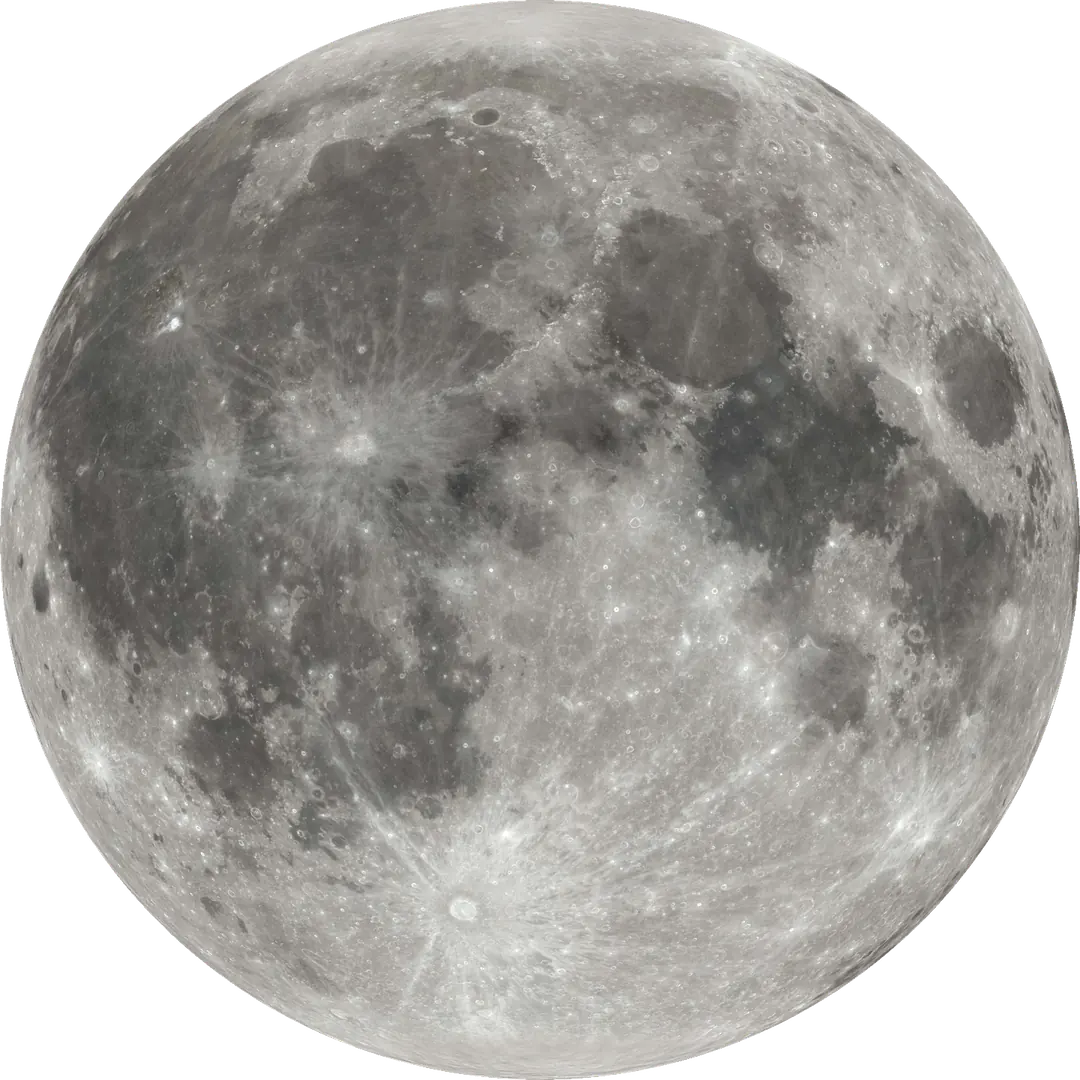
The next Buck Moon is full on . The Buck Moon is the full moon of July in the traditional North American almanac naming, named for the antlers of male deer, which are in full growth in midsummer.
When is the Buck Moon?
The Buck Moon is the full moon that falls in July by Coordinated Universal Time (UTC), and the table below lists the upcoming dates with local times.
The full moon is one instant, so its local date depends on the time zone. A Buck Moon early on July 1 in UTC is still a June 30 full moon in New York. A late-July full moon can fall on August 1 in Sydney. This site names each full moon by its UTC month and lists New York, London and Sydney times beside the UTC time.
For the very next full moon of any month, see the next full moon.
The Buck Moon is the seventh of the twelve full moon names used by the Farmers’ Almanac and the Old Farmer’s Almanac.
Key facts
- The Buck Moon is the full moon of July; this site assigns the name by the UTC date.
- A buck is a male deer; bucks shed and regrow their antlers every year.
- Other names include Thunder Moon, Hay Moon, Salmon Moon and Raspberry Moon.
- The Buck Moon of July 27, 2018 was a total lunar eclipse with more than 100 minutes of totality.
Full moon time around the world
The Buck Moon is full at the same instant everywhere, 15:45 UTC on Sunday, July 18, 2027, which is 11:45 AM on July 18 in New York and 1:45 AM on July 19 in Sydney.
Los Angeles
08:45
Sun 18 Jul · PDT
New York
11:45
Sun 18 Jul · EDT
London
16:45
Sun 18 Jul · GMT+1
Your time
15:45
Sun 18 Jul · UTC
Delhi
21:15
Sun 18 Jul · GMT+5:30
Sydney
01:45
Mon 19 Jul · GMT+10
Why is it called the Buck Moon?
The Buck Moon is named for bucks, or male deer, whose new antlers are in full growth in July.
The Old Farmer’s Almanac explains that bucks shed and regrow their antlers each year, producing a larger and more impressive set as the years go by. EarthSky notes that the growing antlers are covered in velvety fur. The Farmers’ Almanac ties the name to white-tailed deer, whose new antlers show as velvet-covered growth in midsummer.
Other names for the July full moon
Other names for the July full moon include the Thunder Moon, Hay Moon, Berry Moon and Salmon Moon, and they describe thunderstorms, ripening berries, running salmon and molting birds.
The Old Farmer’s Almanac lists these names with the peoples it credits:
- Thunder Moon (Western Abenaki)
- Halfway Summer Moon and Berry Moon (Anishinaabe)
- Feather Moulting Moon (Cree)
- Salmon Moon (Tlingit)
- Moon When the Chokecherries Are Ripe (Dakota)
- Month of the Ripe Corn Moon (Cherokee)
- Raspberry Moon (Algonquin and Ojibwe)
The Farmers’ Almanac and timeanddate also list Hay Moon, a farming name for the season of haymaking. The Farmers’ Almanac adds Antler Moon, which repeats the theme of the main name.
Where is the Buck Moon in the sky?
The next Buck Moon, on , is in the constellation Sagittarius. The Buck Moon rides low in the southern sky, as seen from the Northern Hemisphere, usually among the stars of Sagittarius or Capricornus.
A full moon sits opposite the Sun, and the July Sun is still high, so the Buck Moon follows a low arc. At the latitude of New York, it peaks about 22–35° above the southern horizon. At London’s latitude it reaches only about 11–24°. It stays up for about 9–11 hours in New York and about 8 hours in London.
Around the Buck Moon, moonrise comes about 20–70 minutes later each evening at New York’s latitude. The delay is already shorter than in spring, and it keeps shrinking toward the short autumn delays of the Harvest Moon season.
The brightest stars of Sagittarius form a pattern shaped like a teapot. Sagittarius also lies in the direction of the center of our galaxy, where the summer Milky Way looks brightest from a dark site. A full moon in the same part of the sky washes most of that glow out. For dark-sky viewing, the best moon phase for stargazing is around the new moon, about two weeks before or after the Buck Moon.
Is the Buck Moon a supermoon?
No. The next Buck Moon, on , is a micromoon, 405,968 km (252,257 mi) from Earth. The Buck Moon is a supermoon in some years and not in others, and the dates table above flags each Buck Moon that qualifies.
A supermoon is a full moon within 90% of perigee, the point of the Moon’s orbit closest to Earth. Supermoons come in runs of three or four consecutive full moons, and the run shifts later in the calendar each year. A supermoon looks up to about 14% larger and 30% brighter than a micromoon, a difference that is easier to measure than to see.
The Buck Moon of July 27, 2018 was the opposite of a supermoon: it fell close to apogee, the farthest point of the orbit. That same full moon was a total lunar eclipse, with more than 100 minutes of totality. A year later, the Buck Moon of July 16, 2019 brought a partial lunar eclipse.
The Buck Moon in the Southern Hemisphere
In the Southern Hemisphere the Buck Moon is a midwinter full moon, so its summer name does not match the season there.
Seen from Sydney, the July full moon passes about 70–84° above the northern horizon, nearly overhead. It stays up for about 14–15 hours on a long winter night. Moonrise there comes about 50–80 minutes later each evening around the July full moon, the reverse of the shrinking delays seen in the north.
The full moon before it is June’s Strawberry Moon. The next is August’s Sturgeon Moon, named for the giant fish of the Great Lakes.