
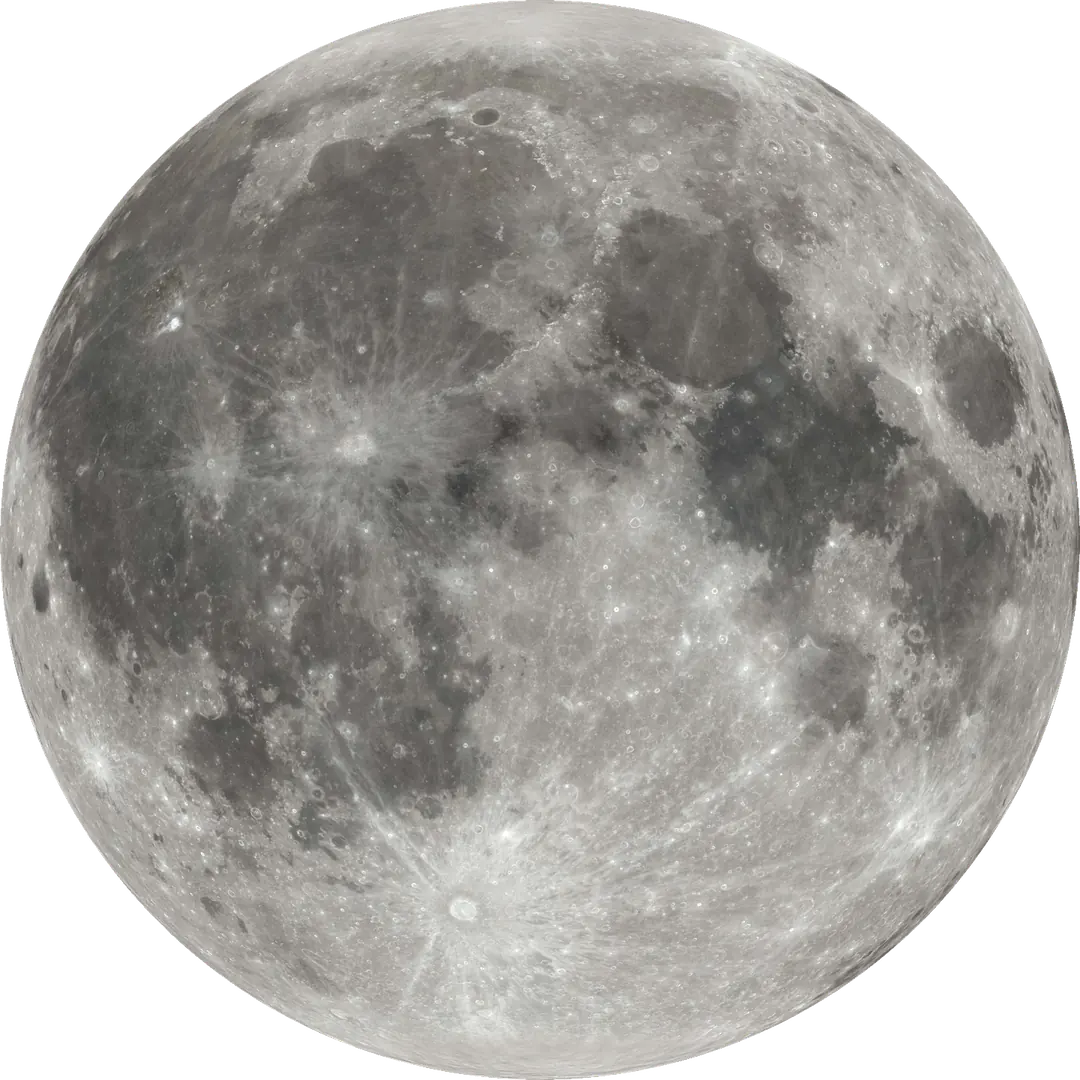
The next Beaver Moon is full on . The Beaver Moon is the full moon of November in the traditional North American almanac naming, named for beavers preparing for winter and for the trapping season that followed.
When is the Beaver Moon?
The Beaver Moon is the full moon that falls in November by Coordinated Universal Time (UTC), and the table below lists the upcoming dates with local times.
The full moon is one instant, so its local date depends on the time zone. A Beaver Moon early on November 1 in UTC is still an October 31 full moon in New York. A late-November full moon can fall on December 1 in Sydney. This site names each full moon by its UTC month and lists New York, London and Sydney times beside the UTC time.
In years when the Harvest Moon falls in early October, the November full moon is the first full moon after it. This site then keeps the name Beaver Moon and adds Hunter’s Moon as an alternative name. For the very next full moon of any month, see the next full moon.
The Beaver Moon is the eleventh of the twelve full moon names used by the Farmers’ Almanac and the Old Farmer’s Almanac.
Key facts
- The Beaver Moon is the full moon of November; this site assigns the name by the UTC date.
- The name refers to beavers finishing their lodges and dams, and to the trapping season for their thick winter pelts.
- In years when the Harvest Moon falls in October, the Beaver Moon also carries the alternative name Hunter's Moon.
- The Beaver Moon of November 5, 2025 was the closest full moon of that year.
Full moon time around the world
The Beaver Moon is full at the same instant everywhere, 14:54 UTC on Tuesday, November 24, 2026, which is 9:54 AM on November 24 in New York and 1:54 AM on November 25 in Sydney.
Los Angeles
06:54
Tue 24 Nov · PST
New York
09:54
Tue 24 Nov · EST
London
14:54
Tue 24 Nov · GMT+0
Your time
14:54
Tue 24 Nov · UTC
Delhi
20:24
Tue 24 Nov · GMT+5:30
Sydney
01:54
Wed 25 Nov · GMT+11
Why is it called the Beaver Moon?
The Beaver Moon is named for beavers, which finish storing food and retreat into their lodges in November, and for the beaver-trapping season of the fur trade.
The Old Farmer’s Almanac describes November as the time when beavers take shelter in their lodges, having laid up enough food for the long winter. It adds that during the fur trade era, November was prime trapping season for the beavers’ thick winter pelts. The Farmers’ Almanac notes that beavers spend October and November shoring up their lodges and dams. It describes the month as the time to set beaver traps before rivers iced over.
EarthSky summarizes the name the same way, as the season when beavers build winter dams before the water freezes.
Other names for the November full moon
Other names for the November full moon include the Frost Moon, Mourning Moon, Turkey Moon and Deer Rutting Moon, and they describe frost and freezing, the deer rut, spawning whitefish and animals preparing for winter.
The Old Farmer’s Almanac lists these names with the peoples it credits:
- Deer Rutting Moon (Dakota and Lakota), for the deer mating season
- Digging Moon or Scratching Moon (Tlingit), for animals foraging and bears preparing dens
- Freezing Moon (Anishinaabe)
- Frost Moon (Cree and Assiniboine)
- Whitefish Moon (Algonquin), for the spawning season of whitefish
The Farmers’ Almanac adds Turkey Moon, which it credits to the Potawatomi, and Moon of Moving Inside for Winter, which it credits to the Kalapuya. It also lists Mourning Moon, a European name that refers to the close of the agricultural year.
Where is the Beaver Moon in the sky?
The next Beaver Moon, on , is in the constellation Taurus. The Beaver Moon rides high in the Northern Hemisphere sky, usually in Aries or Taurus, and in about half of all years it passes within 10° of the Pleiades star cluster.
At the latitude of New York, the November full moon peaks about 60–74° above the southern horizon. At London’s latitude it reaches about 49–64°. It stays up for about 14–16 hours in New York and about 16 hours in London. The Farmers’ Almanac notes that Taurus, carrying the Pleiades, rides high after dark in late November, while Orion rises in the east by mid-evening.
In some years the Beaver Moon sits closer to Aldebaran, the orange eye of Taurus. The Moon’s glare drowns out most of the Pleiades’ fainter stars, so the cluster looks best on moonless evenings around the new moon.
Is the Beaver Moon a supermoon?
Yes. The next Beaver Moon, on , is a supermoon, 360,754 km (224,162 mi) from Earth. The Beaver Moon is a supermoon in some years and not in others, and the dates table above flags each Beaver Moon that qualifies.
A supermoon is a full moon within 90% of perigee, the point of the Moon’s orbit closest to Earth. The Beaver Moon of November 5, 2025 was the closest full moon of that year, at about 356,970 km (221,810 mi). A supermoon looks up to about 14% larger and 30% brighter than a micromoon.
Beaver Moons have also brought notable eclipses. The Beaver Moon of November 19, 2021 was a partial lunar eclipse that covered more than 99% of the Moon’s disc. The Beaver Moon of November 8, 2022 was a total lunar eclipse.
The Beaver Moon in the Southern Hemisphere
In the Southern Hemisphere the Beaver Moon is a late-spring full moon, so its name does not match the season there.
Seen from Sydney, the November full moon stays low in the northern sky, about 31–45° at its highest. It is up for about 11 hours on a short late-spring night. The next named full moon is December’s Cold Moon, usually the highest full moon of the year in the Northern Hemisphere. To see where each full moon falls among the other phases, use the moon phase calendar.