
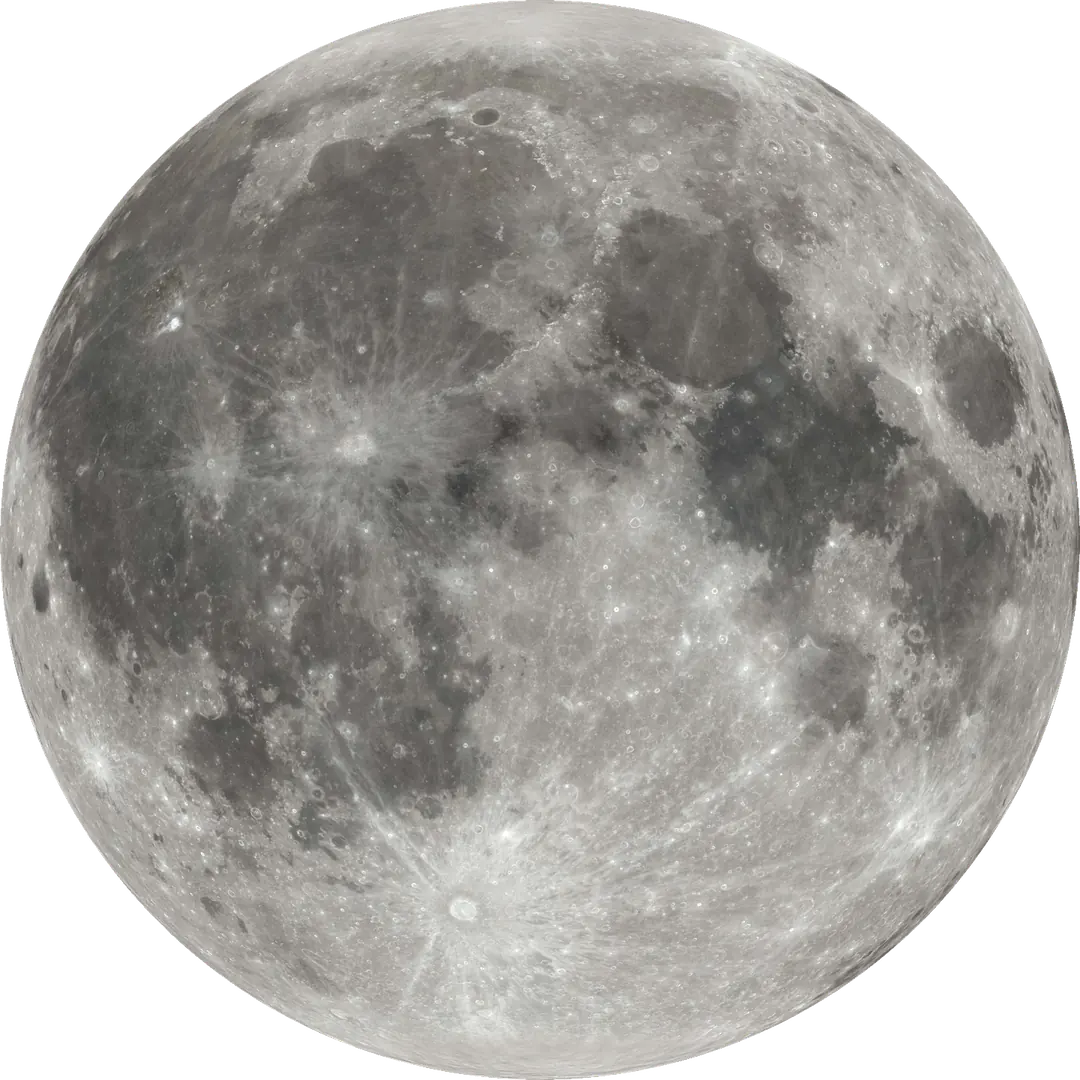
The next Snow Moon is full on . The Snow Moon is the full moon of February in the traditional North American almanac naming, named for the heavy snow of late winter.
When is the Snow Moon?
The Snow Moon is the full moon that falls in February by Coordinated Universal Time (UTC), and the table below lists the upcoming dates with local times.
The full moon is one instant, so its local date shifts with the time zone. A Snow Moon early on February 1 in UTC is still a January 31 full moon in New York. A full moon late on February 28 in UTC can fall on March 1 in Sydney. This site names each full moon by its UTC month and shows New York, London and Sydney times beside it.
For the very next full moon of any month, see the next full moon.
The Snow Moon is the second of the twelve full moon names used by the Farmers’ Almanac and the Old Farmer’s Almanac.
Key facts
- The Snow Moon is the full moon of February; this site assigns the name by the UTC date.
- The Old Farmer's Almanac cites National Weather Service data showing February is, on average, the snowiest month in the United States.
- February can never have two full moons, and in rare years it has none.
- The Snow Moon usually shines in Leo, often within 10° of the bright star Regulus.
Full moon time around the world
The Snow Moon is full at the same instant everywhere, 23:24 UTC on Saturday, February 20, 2027, which is 6:24 PM on February 20 in New York and 10:24 AM on February 21 in Sydney.
Los Angeles
15:24
Sat 20 Feb · PST
New York
18:24
Sat 20 Feb · EST
London
23:24
Sat 20 Feb · GMT+0
Your time
23:24
Sat 20 Feb · UTC
Delhi
04:54
Sun 21 Feb · GMT+5:30
Sydney
10:24
Sun 21 Feb · GMT+11
Why is it called the Snow Moon?
The Snow Moon is named for the heavy snowfall that typically arrives in February across much of North America.
The Old Farmer’s Almanac notes that, on average, February is the snowiest month in the United States, according to National Weather Service data. It also traces the name to Captain Jonathan Carver, who visited the Naudowessie (Dakota) in the 1760s. Carver wrote that they called this period the Snow Moon because more snow commonly fell then than in any other part of the winter.
The Farmers’ Almanac points to the same pattern. It describes February as the month of the heaviest snowfalls in the Ohio River Valley, the Great Lakes and the coastal Pacific Northwest.
Other names for the February full moon
Other names for the February full moon include the Hunger Moon, Bear Moon, Eagle Moon and Storm Moon, and many describe hunger at the end of winter or the animals active in the cold.
The Old Farmer’s Almanac lists these names with the peoples it credits:
- Bald Eagle Moon and Eagle Moon (Cree)
- Bear Moon (Ojibwe)
- Black Bear Moon (Tlingit)
- Month of the Bony Moon and Hungry Moon (Cherokee)
- Goose Moon (Haida)
- Groundhog Moon (Algonquin)
- Raccoon Moon (Dakota)
The Farmers’ Almanac adds Hunger Moon, which it credits to the Cherokee of North Carolina. It also lists Moon of Big Famine, crediting the Choctaw of the southeastern United States. timeanddate explains that hunger names reflect the depleted food supplies of late winter. The Farmers’ Almanac also lists Storm Moon, which it traces to Old English and Celtic almanacs.
Where is the Snow Moon in the sky?
The next Snow Moon, on , is in the constellation Leo. The Snow Moon rides high in the Northern Hemisphere night sky, usually among the stars of Leo near its brightest star, Regulus.
In about two of every three years, the February full moon passes within 10° of Regulus. In other years it sits in neighboring Cancer or the faint constellation Sextans. The Snow Moon rises north of due east around sunset and crosses the southern sky near midnight, as seen from the Northern Hemisphere.
At the latitude of New York, the Snow Moon peaks about 53–70° above the southern horizon and stays up for about 13–15 hours. At London’s latitude it reaches about 42–59°. Orion stands in the south in the early evening as the Snow Moon climbs in the east. Sirius, the brightest star in the night sky, shines to the lower left of Orion.
Around the Snow Moon, moonrise comes about 55–85 minutes later each evening at New York’s latitude, longer than the 50-minute average. Late-winter evenings are when the Moon’s path meets the eastern horizon at its steepest angle. The autumn Harvest Moon shows the opposite effect, with moonrise only 20–30 minutes later each night.
Why some years have no Snow Moon
February is the only month that can pass without a full moon, because even a 29-day leap-year February is shorter than the 29.53-day lunar cycle.
The same rule means February can never hold two full moons, so it is the only month that can never contain a monthly Blue Moon. February 2018 is a recent example of a month with no full moon in UTC. The full moons fell on January 31 and March 2, so January and March 2018 each held two full moons, and each second one was a Blue Moon.
In a year without a February full moon, the dates table simply skips that year. To see where each full moon falls among the other phases, use the moon phase calendar.
The Snow Moon in the Southern Hemisphere
In the Southern Hemisphere the Snow Moon is a late-summer full moon, so its name does not match the season there.
Seen from Sydney, the February full moon stays in the northern sky and peaks about 35–53° above the horizon. It is up for about 11 hours, shorter than a winter full moon there. The next named full moon is the Worm Moon of March, which in the Southern Hemisphere marks early autumn. The full moon before it is January’s Wolf Moon, a midsummer moon south of the equator.