
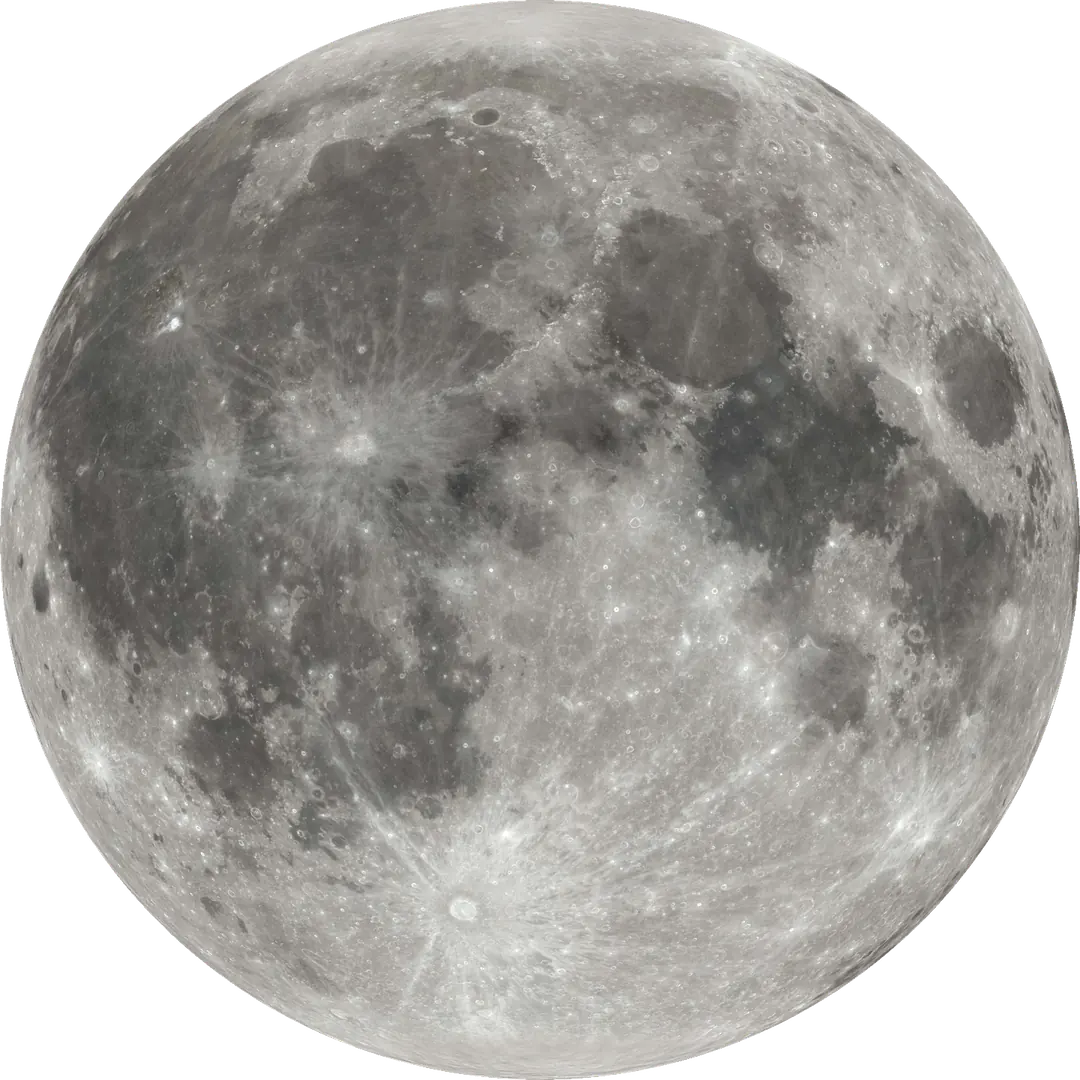
The next Sturgeon Moon is full on . The Sturgeon Moon is the full moon of August in the traditional North American almanac naming, named for the lake sturgeon caught in late summer in the Great Lakes.
When is the Sturgeon Moon?
The Sturgeon Moon is the full moon that falls in August by Coordinated Universal Time (UTC), and the table below lists the upcoming dates with local times.
The full moon is one instant, so its local date depends on the time zone. A Sturgeon Moon early on August 1 in UTC is still a July 31 full moon in New York. A late-August full moon can fall on September 1 in Sydney. This site names each full moon by its UTC month and lists New York, London and Sydney times beside the UTC time.
For the very next full moon of any month, see the next full moon.
The Sturgeon Moon is the eighth of the twelve full moon names used by the Farmers’ Almanac and the Old Farmer’s Almanac.
Key facts
- The Sturgeon Moon is the full moon of August; this site assigns the name by the UTC date.
- The name refers to lake sturgeon, an important food fish for Native peoples around the Great Lakes.
- Other names include Green Corn Moon, Grain Moon, Flying Up Moon and Ricing Moon.
- The Sturgeon Moon of August 28, 2026 was a deep partial lunar eclipse.
Full moon time around the world
The Sturgeon Moon is full at the same instant everywhere, 07:29 UTC on Tuesday, August 17, 2027, which is 3:29 AM on August 17 in New York and 5:29 PM on August 17 in Sydney.
Los Angeles
00:29
Tue 17 Aug · PDT
New York
03:29
Tue 17 Aug · EDT
London
08:29
Tue 17 Aug · GMT+1
Your time
07:29
Tue 17 Aug · UTC
Delhi
12:59
Tue 17 Aug · GMT+5:30
Sydney
17:29
Tue 17 Aug · GMT+10
Why is it called the Sturgeon Moon?
The Sturgeon Moon is named for the lake sturgeon, a large freshwater fish that was readily caught in the Great Lakes and Lake Champlain during late summer.
The Old Farmer’s Almanac describes lake sturgeon as an important food staple for the Native American peoples who lived around those lakes. The Farmers’ Almanac credits Algonquian-speaking nations with the name and says the fish were caught in greatest numbers under the August moon. It describes sturgeon being speared from bark canoes when the fish ran.
timeanddate gives the same reason in brief: large fish could be found easily in the lakes at this time of year.
Other names for the August full moon
Other names for the August full moon include the Corn Moon, Grain Moon, Flying Up Moon and Ricing Moon, and they describe ripening corn and grain, wild rice, young birds learning to fly and ripe chokecherries.
The Old Farmer’s Almanac lists these names with the peoples it credits:
- Flying Up Moon (Cree), for young birds learning to fly
- Black Cherries Moon (Assiniboine), for ripening chokecherries
- Mountain Shadows Moon (Tlingit)
- Corn Moon (Algonquin and Ojibwe)
- Harvest Moon (Dakota)
- Ricing Moon (Anishinaabe)
The Dakota name Harvest Moon differs from the almanac Harvest Moon, which is the full moon nearest the September equinox. The Farmers’ Almanac adds Green Corn Moon, which it credits to Eastern Woodland nations, and Grain Moon, a European name for the small-grain harvest. It also lists Red Moon, for the coppery color the rising August Moon can take.
Where is the Sturgeon Moon in the sky?
The next Sturgeon Moon, on , is in the constellation Capricornus. The Sturgeon Moon shines fairly low in the southern sky, as seen from the Northern Hemisphere, usually among the faint stars of Aquarius or Capricornus.
At the latitude of New York, the August full moon peaks about 27–46° above the southern horizon. At London’s latitude it reaches about 16–35°. It rises south of due east around sunset and sets south of due west around sunrise. It stays up for about 9–12 hours in New York, as nights lengthen toward autumn.
The Harvest Moon effect starts early. Around the Sturgeon Moon, moonrise comes only about 20–50 minutes later each evening at New York’s latitude, and about 10–40 minutes later at London’s.
The Sturgeon Moon and the Perseids
The Perseid meteor shower peaks around August 12–13, and in years when the Sturgeon Moon falls close to that date, its glare hides most of the fainter meteors.
A full moon brightens the whole sky, so only the brightest Perseids show through. Because August moonrises come only 20–50 minutes later each night, the bright waning moon still rises early in the evening for several nights after full. In years when the Perseid peak falls near the new moon, dark skies give the best view. The best moon phase for stargazing explains how each phase affects meteor watching.
Sturgeon Moons and lunar eclipses
The Sturgeon Moon of August 28, 2026 was a deep partial lunar eclipse, and the Sturgeon Moon of August 7, 2017 was a partial eclipse too.
The Farmers’ Almanac reported that about 96% of the Moon’s visible disc entered Earth’s shadow in the 2026 eclipse, which was visible across the Americas. The eclipse peaked at about 04:13 UTC on August 28, 2026. A lunar eclipse can happen only at full moon, when the Moon passes near a node of its tilted orbit.
The Sturgeon Moon in the Southern Hemisphere
In the Southern Hemisphere the Sturgeon Moon is a late-winter full moon, so its summer name does not match the season there.
Seen from Sydney, the August full moon passes about 60–79° above the northern horizon and stays up for about 14 hours. Moonrise there comes about 55–80 minutes later each evening around the August full moon, while northern observers see the delay shrinking.
The full moon before it is July’s Buck Moon. The next is the Harvest Moon or, in some years, the September Corn Moon.