
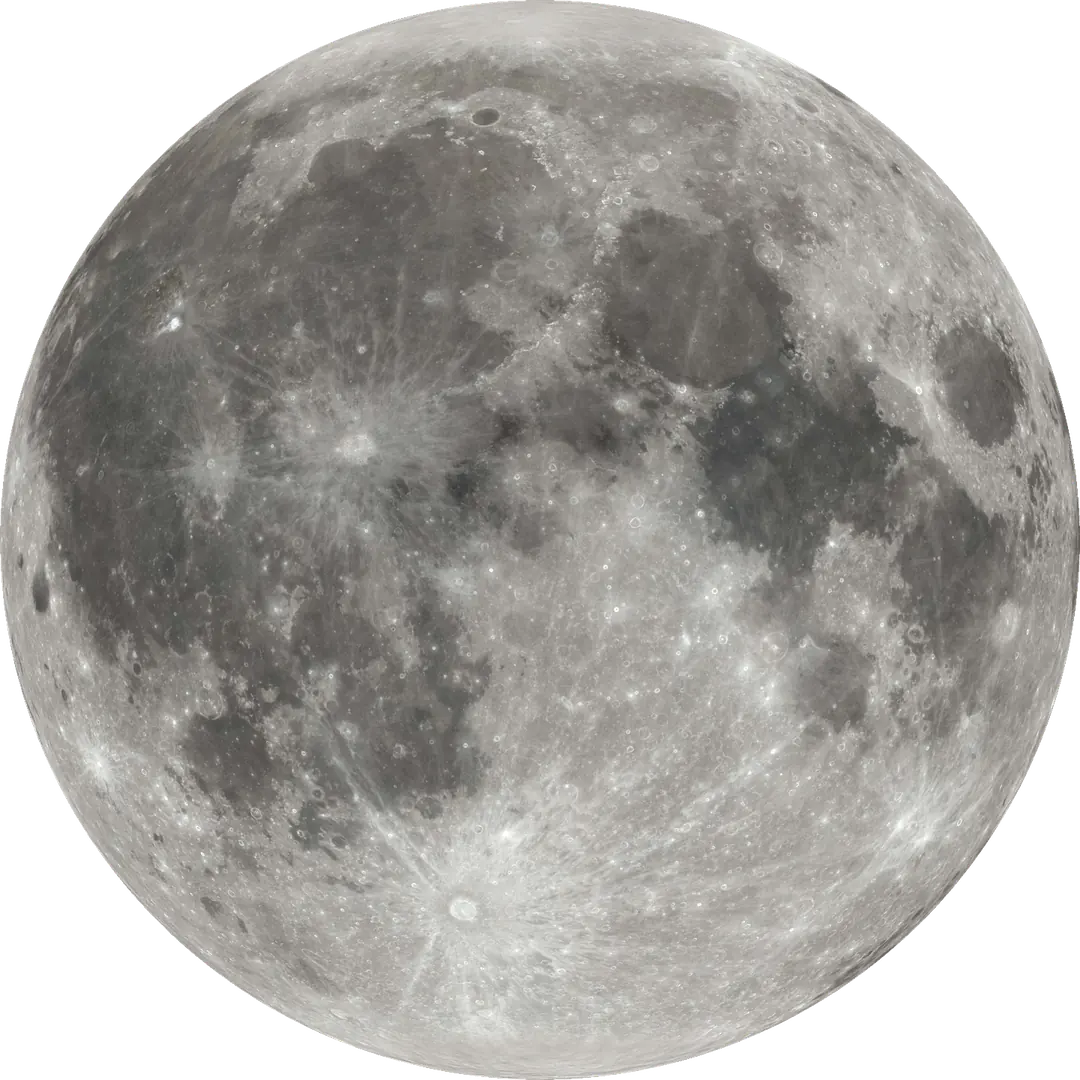
The next Worm Moon is full on . The Worm Moon is the full moon of March in the traditional North American almanac naming, named for the small creatures that stir as frozen ground thaws.
When is the Worm Moon?
The Worm Moon is the full moon that falls in March by Coordinated Universal Time (UTC), and the table below lists the upcoming dates with local times.
The full moon is one instant, so its local date depends on the time zone. A Worm Moon early on March 1 in UTC is still a February full moon in New York, and a late-March full moon can fall on April 1 in Sydney. This site names each full moon by its UTC month and lists New York, London and Sydney times beside the UTC time.
The March equinox falls around March 20 in UTC. A Worm Moon before the equinox is a winter full moon, and one after it is a spring full moon. For the very next full moon of any month, see the next full moon.
The Worm Moon is the third of the twelve full moon names printed in the Farmers’ Almanac and the Old Farmer’s Almanac.
Key facts
- The Worm Moon is the full moon of March; this site assigns the name by the UTC date.
- The name refers to earthworms in thawing soil, or to beetle larvae emerging from tree bark.
- Other names include Crow Moon, Sap Moon, Sugar Moon and Lenten Moon.
- The Worm Moons of March 14, 2025 and March 3, 2026 were both total lunar eclipses.
Full moon time around the world
The Worm Moon is full at the same instant everywhere, 10:44 UTC on Monday, March 22, 2027, which is 6:44 AM on March 22 in New York and 9:44 PM on March 22 in Sydney.
Los Angeles
03:44
Mon 22 Mar · PDT
New York
06:44
Mon 22 Mar · EDT
London
10:44
Mon 22 Mar · GMT+0
Your time
10:44
Mon 22 Mar · UTC
Delhi
16:14
Mon 22 Mar · GMT+5:30
Sydney
21:44
Mon 22 Mar · GMT+11
Why is it called the Worm Moon?
The Worm Moon is named for worms that appear as the ground warms at the end of winter, though sources differ on which kind of worm.
The Old Farmer’s Almanac gives the traditional explanation first: earthworms appear as the soil warms in early spring, drawing birds such as robins. It then notes an older account. In the 1760s, Captain Jonathan Carver recorded that the name referred to beetle larvae, which emerge from thawing tree bark and winter hiding places.
The Farmers’ Almanac includes both groups, along with grubs, emerging from winter dormancy. It adds that earthworms break down organic matter, mix soil layers and open channels for water and air. Lunar planting traditions also start their outdoor season around this time; gardening by the moon explains how those traditions use the phases.
Other names for the March full moon
Other names for the March full moon include the Crow Moon, Sap Moon, Sugar Moon and Lenten Moon, and most describe the end of winter: returning birds, running maple sap, crusted snow and strong winds.
The Old Farmer’s Almanac lists these names with the peoples it credits:
- Crow Comes Back Moon (Northern Ojibwe)
- Sugar Moon (Ojibwe), for the season when sugar maple sap begins to flow
- Sore Eyes Moon (Dakota, Lakota and Assiniboine), for sunlight glaring off melting snow
- Snow Crust Moon (Anishinaabe)
- Goose Moon (Algonquin and Cree)
- Eagle Moon (Cree)
- Wind Strong Moon (Pueblo)
The Farmers’ Almanac and timeanddate also list Crow Moon, Sap Moon and Lenten Moon. Sap Moon refers to the maple syrup season. Lenten Moon comes from Lent, the Christian season of fasting before Easter.
Where is the Worm Moon in the sky?
The next Worm Moon, on , is in the constellation Virgo. The Worm Moon rises close to due east, sets close to due west, and climbs to a middle height in the sky, much like the Sun at the equinox.
At the latitude of New York, the March full moon peaks about 41–59° above the southern horizon. At London’s latitude it reaches about 30–49°. It stays up for about 11–14 hours in New York, close to an even split of day and night.
The Worm Moon usually sits in Virgo or Leo, between Regulus in Leo and Spica in Virgo. Around this full moon, moonrise comes about 55–80 minutes later each evening at New York’s latitude, among the longest delays of the year.
Worm Moons and lunar eclipses
The Worm Moon has recently lined up with several eclipses, because March has fallen inside an eclipse season.
A lunar eclipse can happen only at full moon, when the Moon passes through Earth’s shadow near a node of its tilted orbit. The Worm Moon of March 25, 2024 was a penumbral eclipse. The Worm Moons of March 14, 2025 and March 3, 2026 were both total lunar eclipses.
Eclipse seasons recur about every 173 days, so they arrive slightly earlier in the calendar each year. That drift gradually moves eclipses away from March and into February.
The Worm Moon in the Southern Hemisphere
In the Southern Hemisphere the Worm Moon is an early-autumn full moon, so its spring name does not match the season there. Seen from Sydney, the March full moon peaks about 46–65° above the northern horizon and stays up for about 12 hours.
The March full moon also gives Southern Hemisphere observers their own version of the autumn Harvest Moon effect. In Sydney, moonrise around the March full moon comes only about 25–45 minutes later each evening. Six months later, around the September full moon, the delay in Sydney grows to about 55–75 minutes.
The full moon before the Worm Moon is February’s Snow Moon. The next is April’s Pink Moon, named for an early spring wildflower.