
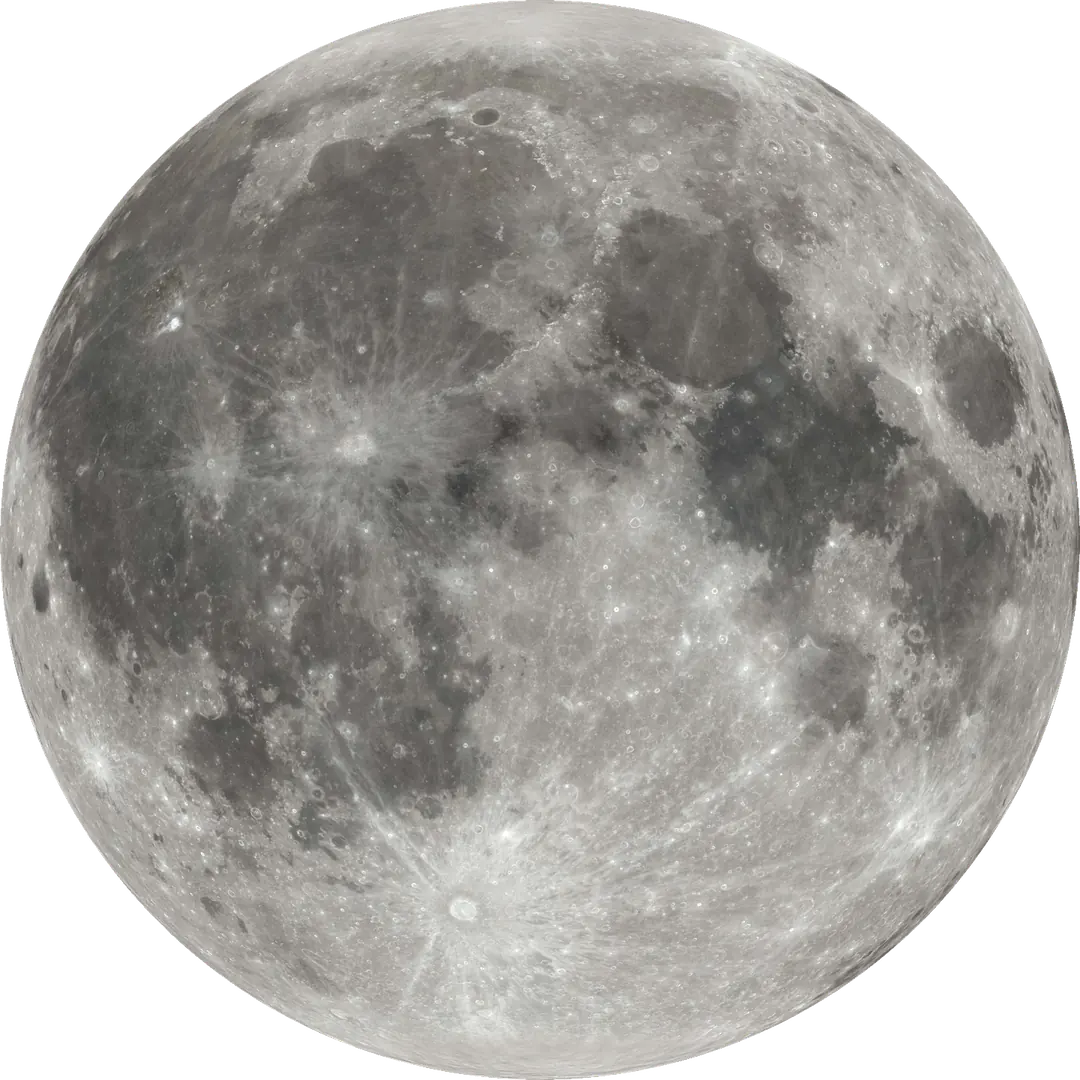
The next Harvest Moon is full on . The Harvest Moon is the full moon nearest the September equinox in the traditional North American almanac naming, so it falls in September in most years and in early October in some.
When is the Harvest Moon?
The Harvest Moon is whichever full moon falls closest to the September equinox, and the table below lists the upcoming dates with local times.
The September equinox falls around September 22 or 23. A full moon in the last week of September or the first week of October is usually the Harvest Moon. By this site’s calculation, the Harvest Moon falls in October in 11 of the 50 years from 2000 to 2049, about one year in five.
Time zones can also move the date. The Harvest Moon of 2025 fell at 03:48 UTC on October 7, which was still the evening of October 6 in New York. For the very next full moon of any month, see the next full moon.
Unlike most of the twelve full moon names, the Harvest Moon is set by an equinox rather than by a calendar month.
The Corn Moon
The Corn Moon is the September full moon in years when the Harvest Moon falls in October, and it is an alternative name for a September Harvest Moon.
The Old Farmer’s Almanac ties the name to the time of harvesting corn in much of the northern United States. The Corn Moon table therefore includes September Harvest Moons as well as true Corn Moons. When a September full moon is also nearest the equinox, it is the Harvest Moon, with Corn Moon as its second name.
Key facts
- The Harvest Moon is the full moon closest to the September equinox, not simply September's full moon.
- When the Harvest Moon falls in October, September's full moon is called the Corn Moon.
- Near the Harvest Moon, moonrise comes about 20–30 minutes later each evening at New York's latitude, instead of about 50.
- The Harvest Moon of September 28, 2015 was a supermoon and a total lunar eclipse.
Full moon time around the world
The Harvest Moon is full at the same instant everywhere, 23:04 UTC on Wednesday, September 15, 2027, which is 7:04 PM on September 15 in New York and 9:04 AM on September 16 in Sydney.
Los Angeles
16:04
Wed 15 Sept · PDT
New York
19:04
Wed 15 Sept · EDT
London
00:04
Thu 16 Sept · GMT+1
Your time
23:04
Wed 15 Sept · UTC
Delhi
04:34
Thu 16 Sept · GMT+5:30
Sydney
09:04
Thu 16 Sept · GMT+10
Why is it called the Harvest Moon?
The Harvest Moon is named for the crop harvest, because its bright light arrives in the early evening when farmers worked late to bring crops in.
EarthSky describes the Harvest Moon as valued for the light that let farmers harvest crops into the night. timeanddate notes that farmers tend to harvest their crops around this full moon. The Old Farmer’s Almanac connects the season’s full moon to corn being ready to harvest.
The Farmers’ Almanac stresses that the Harvest Moon is not always September’s full moon. It is whichever full moon falls closest to the autumn equinox, in either September or October.
Why does the Harvest Moon rise so soon after sunset?
Around the September equinox, the Moon’s path meets the eastern horizon at a shallow angle in the evening, so the Moon rises only about 20–30 minutes later each night instead of about 50.
The Moon moves about 12° east of the Sun each day. Usually that daily step leaves the Moon well below the eastern horizon at the time it rose the evening before, so moonrise comes about 50 minutes later. Near the September equinox, the full moon sits where its path slants low along the evening horizon. The daily step then carries the Moon mostly sideways rather than downward.
By this site’s calculation, moonrise around the Harvest Moon comes about 20–40 minutes later each evening at New York’s latitude, averaging 28 minutes. At London’s latitude the delay averages about 19 minutes and can drop near 10. The everyday version of this effect is covered in why the moon rises later each day.
Other names for the September full moon
Other names for the September full moon include the Barley Moon, Corn Harvest Moon, Falling Leaves Moon and Rutting Moon, and they describe turning leaves, the corn and rice harvests and the start of the rutting season.
The Old Farmer’s Almanac lists these names with the peoples it credits:
- Autumn Moon, Mating Moon and Rutting Moon (Cree)
- Child Moon (Tlingit)
- Corn Harvest Moon and Moon When the Rice Is Laid Up to Dry (Dakota)
- Corn Maker Moon (Western Abenaki)
- Falling Leaves Moon (Ojibwe)
- Leaves Turning Moon (Anishinaabe)
- Moon of Brown Leaves (Lakota)
- Yellow Leaf Moon (Assiniboine)
The Farmers’ Almanac adds Barley Moon, an Old English farming name for the season when barley was cut.
Why does the Harvest Moon look orange and large?
A rising Harvest Moon looks orange because its light crosses the densest layers of Earth’s atmosphere, and it looks large because of the Moon illusion.
The Old Farmer’s Almanac notes that the Harvest Moon appears largest when rising or setting and often looks larger and more golden just after moonrise. Its measured size does not change. Because it rises near sunset on several evenings in a row, more people see it low and warm-toned.
Some Harvest Moons have been eclipses. The Harvest Moon of September 28, 2015 was a supermoon and a total lunar eclipse. The Harvest Moon of September 18, 2024 brought a slight partial eclipse, and the Corn Moon of September 7, 2025 was a total lunar eclipse.
The Harvest Moon in the Southern Hemisphere
In the Southern Hemisphere the September full moon is a spring moon, and the short-delay Harvest Moon effect happens around the March equinox instead.
Seen from Sydney, moonrise around the September full moon comes about 55–75 minutes later each evening. Around the March full moon it comes only about 25–45 minutes later. The full moon before the Harvest Moon is usually August’s Sturgeon Moon. The full moon after it is the Hunter’s Moon, which shows a similar early-rising pattern.