
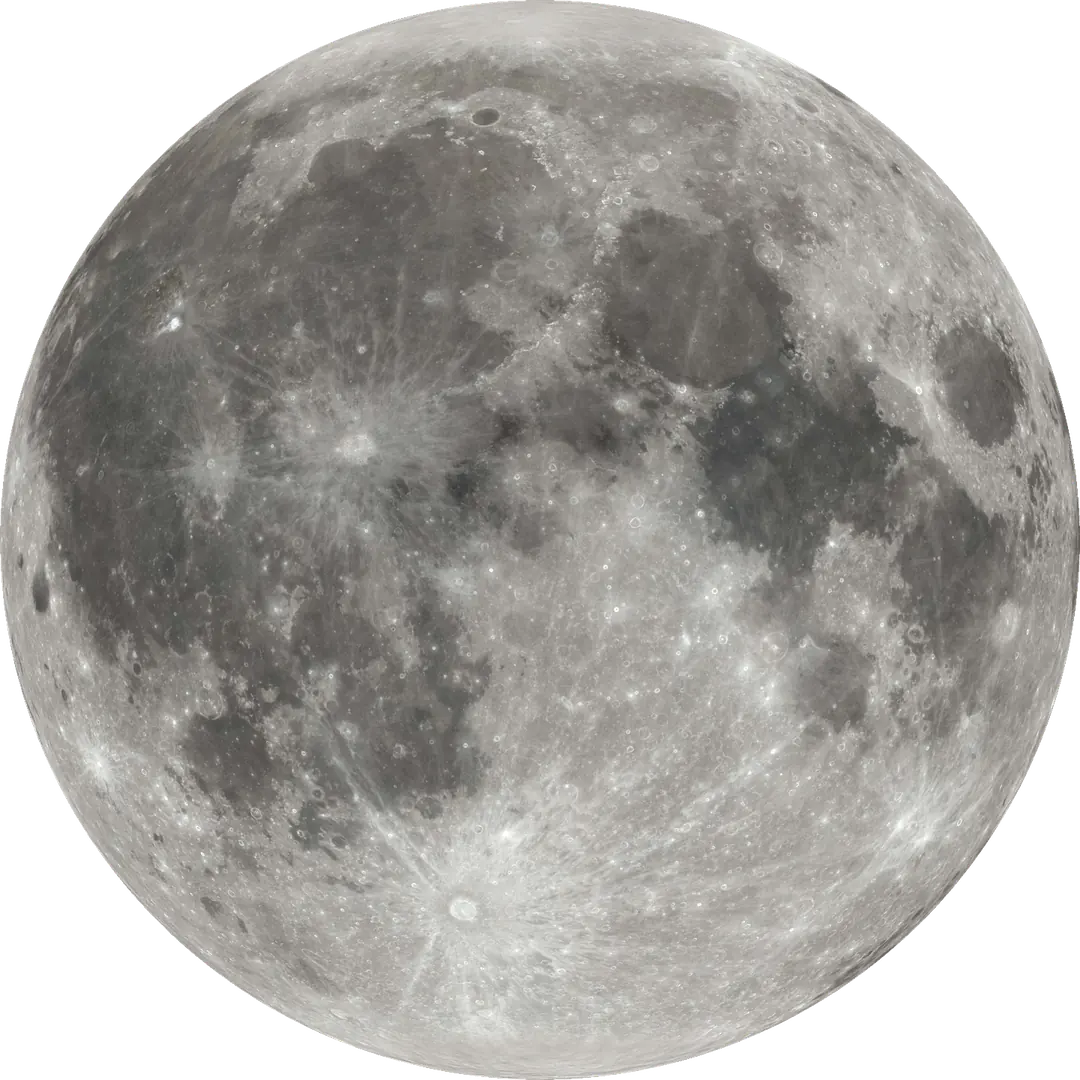
The next Hunter’s Moon is full on . The Hunter’s Moon is the first full moon after the Harvest Moon in the traditional North American almanac naming, which makes it the October full moon in most years.
When is the Hunter’s Moon?
The Hunter’s Moon is the full moon that follows the Harvest Moon, and the table below lists the upcoming dates with local times.
The Hunter’s Moon depends on the Harvest Moon, the full moon nearest the September equinox. When the Harvest Moon falls in September, the October full moon is the Hunter’s Moon. When the Harvest Moon falls in early October, this site keeps the following full moon’s own name and lists Hunter’s Moon as its alternative. Those years are usually missing from the table above.
The full moon is one instant, so its local date depends on the time zone. A late-October Hunter’s Moon in UTC can fall on November 1 in Sydney. This site names each full moon by its UTC month and lists New York, London and Sydney times beside the UTC time. For the very next full moon of any month, see the next full moon.
The Hunter’s Moon is the tenth of the twelve full moon names used by the Farmers’ Almanac and the Old Farmer’s Almanac.
Key facts
- The Hunter's Moon is the full moon after the Harvest Moon, usually in October.
- In years when the Harvest Moon falls in October, this site lists Hunter's Moon as an alternative name for the November full moon.
- Moonrise around the Hunter's Moon comes about 20–50 minutes later each evening at New York's latitude.
- The Hunter's Moon of October 8, 2014 was a total lunar eclipse.
Full moon time around the world
The Hunter's Moon is full at the same instant everywhere, 13:47 UTC on Friday, October 15, 2027, which is 9:47 AM on October 15 in New York and 12:47 AM on October 16 in Sydney.
Los Angeles
06:47
Fri 15 Oct · PDT
New York
09:47
Fri 15 Oct · EDT
London
14:47
Fri 15 Oct · GMT+1
Your time
13:47
Fri 15 Oct · UTC
Delhi
19:17
Fri 15 Oct · GMT+5:30
Sydney
00:47
Sat 16 Oct · GMT+11
Why is it called the Hunter’s Moon?
The Hunter’s Moon is named for the hunting season of late autumn, when game was fattened for winter and easy to spot in cleared fields.
The Old Farmer’s Almanac explains that by this time fields are typically cleared and leaves have fallen, so animals are easier to see in open landscapes. Its full moon names list adds that the game is fattened up for winter. The Farmers’ Almanac notes that deer and other game feed on fallen grain after the harvest. It says a bright full moon over open ground extends the day for anyone stocking the larder before winter.
timeanddate also ties the name to hunting and to preserving meat for the winter months.
Other names for the October full moon
Other names for the October full moon include the Travel Moon, Dying Grass Moon, Falling Leaves Moon and Freezing Moon, and they describe drying rice, falling leaves, the first freezes and migrating animals.
The Old Farmer’s Almanac lists these names with the peoples it credits:
- Drying Rice Moon (Dakota)
- Falling Leaves Moon (Anishinaabe)
- Freezing Moon (Ojibwe)
- Ice Moon (Haida)
- Migrating Moon (Cree)
The Farmers’ Almanac also lists Travel Moon and Dying Grass Moon. Both the Farmers’ Almanac and timeanddate list Blood Moon and Sanguine Moon as alternative names. The Farmers’ Almanac links these names to haze that can tint the rising Moon red. They are unrelated to the eclipse sense of a blood moon, when Earth’s shadow turns the Moon coppery red.
Where is the Hunter’s Moon in the sky?
The next Hunter's Moon, on , is in the constellation Pisces. The Hunter’s Moon usually shines among the faint stars of Pisces, sometimes in neighboring Aries or Cetus, and it climbs higher than the summer full moons.
At the latitude of New York, the October full moon peaks about 48–67° above the southern horizon. At London’s latitude it reaches about 38–56°. It rises a little north of due east around sunset and stays up for about 12–15 hours in New York, as autumn nights lengthen. The full moons that follow climb higher still, peaking around the winter solstice.
Pisces has no bright stars, so the Hunter’s Moon often outshines everything near it. Its glare also hides faint autumn targets, so deep-sky observers usually wait for the darker nights around the new moon.
Why does the Hunter’s Moon rise so early?
Like the Harvest Moon, the Hunter’s Moon rises only a little later on successive evenings, because the Moon’s path still meets the eastern horizon at a shallow angle in autumn.
By this site’s calculation, moonrise around the October full moon comes about 20–50 minutes later each evening at New York’s latitude, averaging about 31 minutes. At London’s latitude the delay averages about 22 minutes. The usual delay is about 50 minutes, explained in why the moon rises later each day. The Farmers’ Almanac notes that this early rising gave extra evening light for outdoor work and hunting.
Some Hunter’s Moons have also been eclipses. The Hunter’s Moon of October 8, 2014 was a total lunar eclipse, and the Hunter’s Moon of October 28, 2023 brought a small partial eclipse that covered about 6% of the Moon’s disc.
The Hunter’s Moon in the Southern Hemisphere
In the Southern Hemisphere the Hunter’s Moon is a spring full moon, and it shows the opposite rising pattern.
Seen from Sydney, moonrise around the October full moon comes about 50–80 minutes later each evening, longer than the 50-minute average. There, the October full moon peaks about 39–57° above the northern horizon and stays up for about 12 hours. The full moon after the Hunter’s Moon is November’s Beaver Moon, named for beavers preparing their lodges for winter.